Submit Court Filing
HomeCareers
Idaho Supreme Court
    • Home
    • Careers
    • Public & Media Resources
      • News Releases
      • Media Guide
      • Court Records & Cameras
      • Livestreams
      • Idaho Court Data
  1. Home
  2. About The Courts
  3. History of the Idaho Courts

History of the Idaho Courts

Idaho’s state courts have served the public for more than 160 years. Though the times and technology may change, our courts remain rooted in the same rule of law that has governed this state since its creation. From frontier courtrooms to modern-day courthouses, the Judicial Branch continues its mission to provide access to justice through fair processes and the timely, impartial resolution of cases.

  • 1863

    Territorial Foundations

    Congress established the Idaho Territory through the Organic Act of March 4, 1863, creating the first formal court system in the region.

    The Organic Act created a territorial judiciary consisting of a supreme court, district courts, and local courts made up of probate and justice courts. Territorial supreme court justices were appointed by the president. Those same justices also served as district court judges within three assigned judicial districts.

    The Act created a broad framework for the territorial courts. But most practical court functions — including procedures, criminal and civil codes, and court administration — were developed by the first territorial legislature. During this period, courts were often decentralized and pragmatic, reflecting the realities of a frontier territory with limited resources and a sparse population.
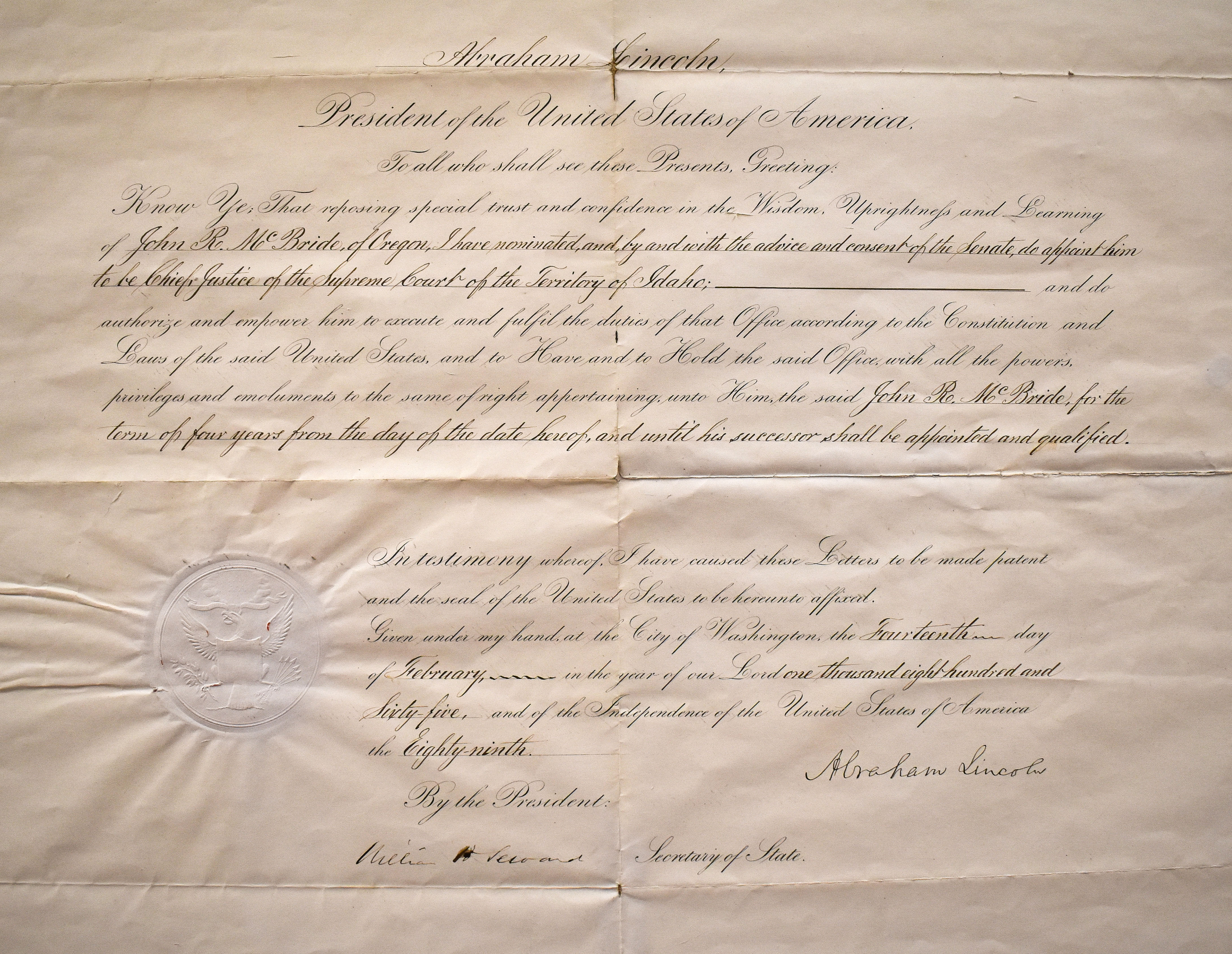
    Document signed by President Abraham Lincoln appointing John McBride as chief justice of the Idaho Territorial Supreme CourtThis document signed by President Abraham Lincoln appointing John McBride as chief justice of the Idaho Territorial Supreme Court hangs in the robing room of the current Idaho Supreme Court.
  • 1890

    Statehood

    When Idaho became a state in 1890, its Constitution formally established the Judicial Branch as a coequal branch of government. The Constitution created the Idaho Supreme Court, district courts, and various lower courts including probate, municipal, and justice of the peace courts.

    At the local level, many lower court judges were not required to be attorneys, and courts often operated informally in the early years of statehood. The Supreme Court consisted of three justices who rotated service as Chief Justice based on seniority.

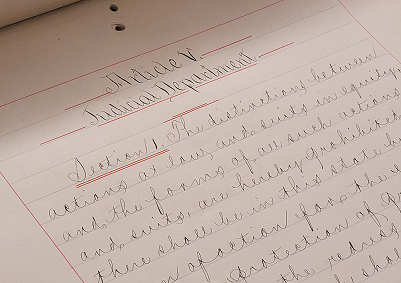
    Article V of Idaho’s Constitution describes the Judicial Branch. This image shows the original copy of that document, maintained by the Idaho State Historical Society.Article V of Idaho’s Constitution describes the Judicial Branch. This image shows the original copy of that document, maintained by the Idaho State Historical Society.
  • 1900s – 1950s

    Early Years and Court Evolution

    In the first half of the 20th century, practices and policies varied widely across the various types of courts. Justices of the peace handled misdemeanors and small civil claims, often presided over by non-attorney judges. Probate courts handled estates, guardianships, and some juvenile matters. Municipal courts enforced city ordinances.

    This system ensured access to justice on the local level, but it produced inconsistencies in procedure, training, and recordkeeping across counties.

    Population growth, economic development, and increasing legal complexity in Idaho drove higher appellate caseloads in the state’s early years. In response, a 1919 constitutional amendment expanded the Idaho Supreme Court from three to five justices, improving efficiency and strengthening statewide appellate review. This five-justice structure remains in place today.

    Court and legal professionals also began to recognize the need for a more unified, professionally administered court system. Various attempts were made to examine the issue through attorney and court committees, but it wasn’t until the middle of the century that momentum built toward more centralized judicial administration.

    In the early years of statehood, political parties played a visible role in Idaho’s judicial elections. But this affiliation began to erode public trust that the judiciary was a neutral arbitrator of the law.

    In the early 1930s a national discussion began to emerge about the need to balance public accountability with judicial independence. This led Idaho voters to approve a constitutional amendment in 1934 establishing nonpartisan elections in which judicial candidates were not listed under a party affiliation.

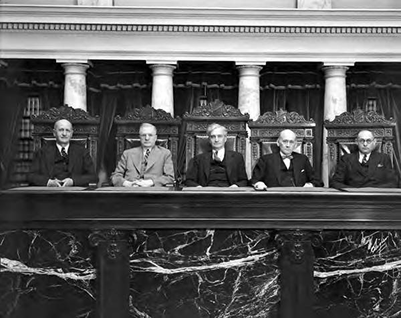
    Idaho Supreme Court justices photographed in 1937. The courtroom shown here is now the budget hearing room for the Idaho Legislature.Idaho Supreme Court justices photographed in 1937. The courtroom shown here is now the budget hearing room for the Idaho Legislature.
  • 1960s – 1980s

    Full Unification and Reform

    In 1961, the Idaho Legislature proposed constitutional changes allowing for a major restructuring of the court system, and in 1962 Idaho voters approved them. The amendments removed mention of the probate and municipal courts and justices of the peace, strengthened the administrative authority of the Idaho Supreme Court, and created the legal framework for a unified statewide judiciary.

    Lawmakers then spent the next several years developing how that unified system would look. By the end of the decade, the Supreme Court gained an administrative arm to help it administer the court system, and the Legislature approved creating a magistrate division of the district courts to replace the scattered lower courts. The magistrate division began operations in 1971. The rest of the 1970s saw refinement to the new unified approach. As Court administration continued to become more organized, conversations began again about renewed pressure put on the Supreme Court by increases in its appellate caseloads.

    Discussions in broad committees set up by the Supreme Court and State Bar led to a legislative proposal for an Idaho Court of Appeals, which would hear cases as assigned to it by the Supreme Court. The Legislature acted on this proposal during its 1980 session and the Court of Appeals began operations in 1982.

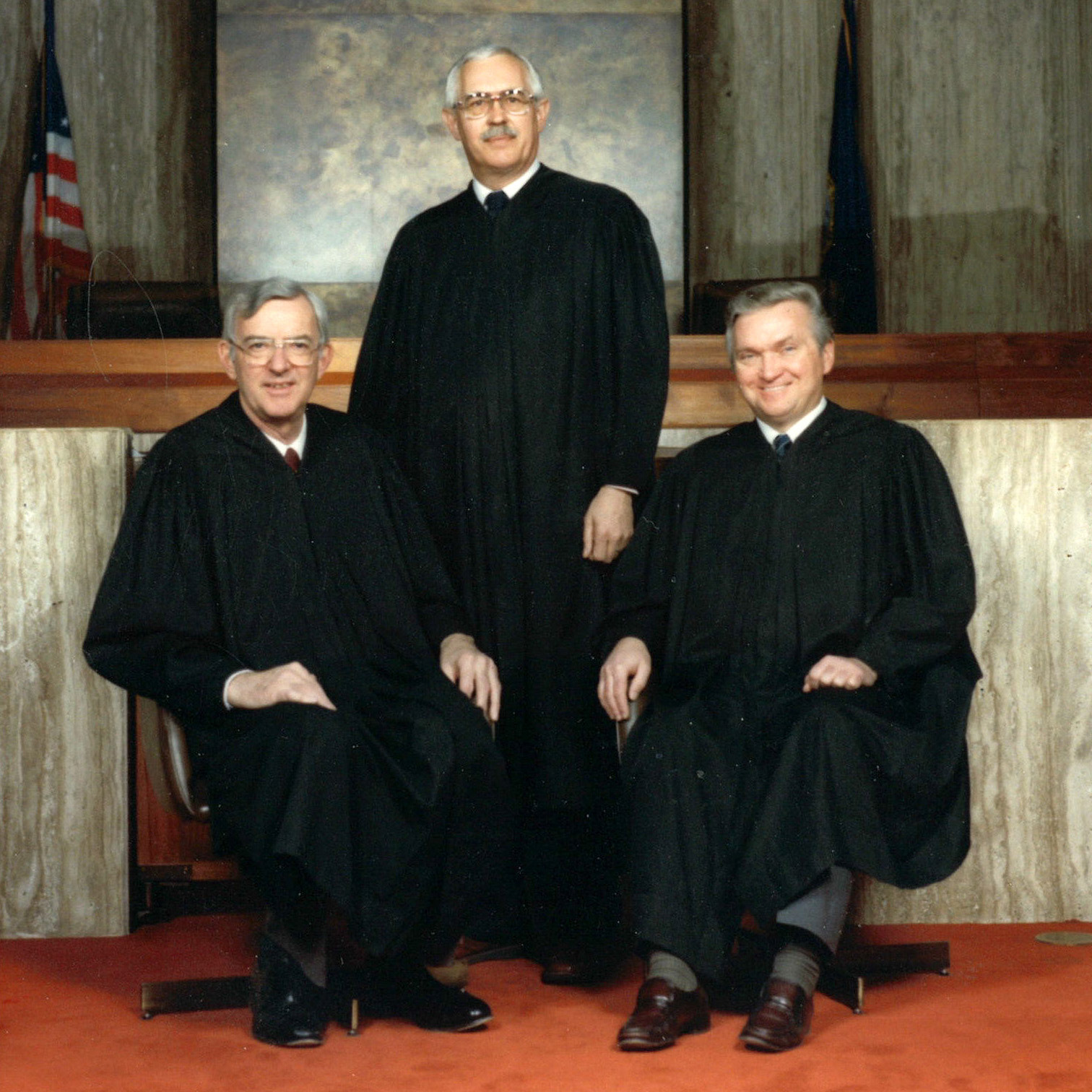
    The first members of the Idaho Court of Appeals pose for a photo in 1982.The first members of the Idaho Court of Appeals pose for a photo in 1982.
  • 1990s – Today

    The Modern Judiciary

    Idaho’s state courts in recent decades have continued to modernize their operations, finding new efficiencies through technology and developing more specialized courts to benefit the public.

    The Supreme Court in the late 1980s began rolling out a system for computerized management of many trial court operations. In the 2010s, this evolved into a full electronic case management system for the courts. Today, Idaho court records are largely digital, though paper filing options remain for certain groups such as self-represented litigants. The 1980s also saw the creation of a state water court to oversee the formal inventorying and legal confirmation of water rights across Idaho. That court continues its work today, adjudicating rights across various smaller river basins and hearing water-related disputes.

    Idaho’s first treatment courts were introduced in the late 1990s. These courts combine proven treatment methods with accountability and support for individuals with substance use or mental health challenges. Multiple state and national studies have confirmed participants in these courts are less likely to commit new crimes and are more likely to reintegrate into their communities, fundamentally changing the course of their lives.

    Attendees at a Canyon County Mental Health Court graduation in August 2024.Attendees at a Canyon County Mental Health Court graduation in August 2024.
Idaho Supreme Court
Phone: (208) 334-2210Physical: 451 W. State St, Boise, ID 83702Mail: P.O. Box 83720, Boise, ID 83720

We are committed to ensuring digital accessibility. Read Our Accessibility Statement

About Us

  • About the Courts
  • Mission & Goals
  • Contact Us & Suggestions

iCourt

  • iCourt Portal
  • iCourt Guide and File
  • iCourt File and Serve

Site Information

  • Careers
  • Site Map

Help

  • ADA Accessibility
  • Privacy & Security
  • Cybersecurity

Related Sites

  • Judicial Council
  • State Law Library
  • Legal Aid Resources

Judicial Branch Sites

  • Idaho Court Data
  • Judicial Branch Annual Report
  • Cases of Interest
  • Court Assistance Office
  • Idaho Water Adjudications
  • Party Verify

© All rights reserved.